How Hard Water Impacts Laundry Processes & Detergents for Washing in Hard Water

You might have heard the term “hard water” in one of your go-to bathroom cleaning guides. Indeed, hard water can cause havoc in the bathroom when it builds up over time. It may lead to chalky white residue on your sinks or plastic shower curtain liners. But have you thought about how hard water can impact the laundry process?
The most important aspect of dealing with hard water is identifying whether your plumbing system transports hard water throughout your household. However, you also need to know whether your detergent is more or less effective in hard water. We’re going to give you the scoop on hard water and detergents to use with hard water so you can help keep your items looking and smelling fresh.
What is Hard Water?
You have “hard water” when the water supply absorbs excess hard minerals, notably calcium and magnesium, before reaching civilians in various communities. It’s measured in grains per gallon (gpg) whereby greater than 3.5-7 gpg is considered “moderate” and greater than 7.5 gpg is considered “hard.”
Do I Have Hard Water?
You more than likely have hard water in your home. The U.S. Geological Survey has estimated that somewhere around 85 percent of U.S. households have hard water. This also includes the 15 percent of people who get their water from private, “domestic” wells.
Those are some of the numbers behind hard water, but it doesn’t help you much on a practical level. The first thing to note is that hard water does not pose any health risks. However, it can cause limescale buildup that gets worse over time. This buildup can reduce water pressure and flow, thereby reducing the efficiency of your appliances that require water for operation.
Naturally, that last part is important for laundry purposes since your washer uses, well, water. But how do you know whether your household has hard water?
How to Know if You Have Hard Water
You probably aren’t undergoing regular water testing in your home. Nevertheless, certain telltale signs may indicate you have hard water. These can include:
- White, chalky residue or soap scum buildup in your dishwasher or washing machine; you may also see hazy white spots on your plates, glassware, or other dishes.
- Similarly, limescale buildup on faucets, shower heads, and bathtubs. You may notice more rusting than usual on some of these appliances.
- Low water pressure from your showers and sinks because of clogging.
- Soap that won’t lather.
- Dry skin after washing or clothes that feel rough upon washing and drying. Your clothes may also look duller and more discolored.
There’s also a quick and easy test you can do to gauge your water level. All you need is a clean empty bottle with a cap, water, and some liquid soap.
To do this at-home water test, fill your empty bottle one-third full with water. Next, add a few drops of your liquid soap. Shake the bottle for several seconds, then observe. If the solution does not bubble or appears cloudy or milky, you have hard water – moderate or soft water would see more bubbling and clear resting water.
Identifying Hard Water Spots on Clothes
We spoke to your hard water leaving your clothes feeling rough and looking dingy. But it’s possible you also have hard water spots on your clothes. How do you identify them?
Hard water spots on clothes will likely appear as grey streaks or powdery residue. It’s also possible your clothes see some staining, usually with a slightly yellowish or orange tint. Keep a close eye on your laundry items and see whether you can find any hard water spotting or staining on your clothes.
You might not necessarily think hard water spots are the biggest deal in the world. After all, they may not be as visible or difficult to remove as common stains (including chocolate stains and grease stains) or set-in stains. But here’s the rub: hard water severely threatens the integrity of your clothes.
Hard water can break down the fibers in your clothes and lead to a reduced lifespan. Moreover, hard water can cause colors to fade at a more rapid rate, hence the dingy or dull look you might see on some of your clothes after multiple washes in hard water. Plus, hard water buildup makes it harder for your laundry detergent to fully dissolve and mesh with the water in your washer, which in turn can lead to laundry detergent residue on your clothes.
Of course, we’ve already stated that most residences in the United States have hard water. That means it’s something you naturally have to deal with during the laundry process. So, what do you do about hard water and laundry?
@armandhammerlaundry Watch Erin Andrews break down the mess, and watch how Arm & Hammer Deep Clean comes to the rescue! 🧺 🛒 Now available at Walmart, Target and Amazon. #AHPartner | ✨#repost from @erinandrews #laundryhacks #laundrytok #laundry ♬ original sound - ARM & HAMMER Laundry
Tips for Doing Laundry with Hard Water & How to Remove Hard Water Stains on Clothes
If you’re struggling to solve the hard water laundry problem, you almost certainly are not alone. Take a look at some of the following tips and tricks for washing clothes in hard water and cleaning hard water spots and stains from your clothes.
1. Use a Laundry Detergent for Hard Water
What exactly is a laundry detergent for hard water? It’s one that can work harder to trap and absorb the soils (and thus the minerals) in the water used during the wash cycle. Enzymatic laundry detergents, including the ARM & HAMMER™ Plus OxiClean™ line, are also particularly valuable in hard water because they contain ingredients that help break down the minerals in hard water and thus remove hard water spots and stains.
Moreover, you should consider using a laundry detergent that includes baking soda since, as an alkaline compound, it can help to temporarily soften water during the wash process—which is an important consideration when it comes to your clothes and your skin (more on this shortly).
ARM & HAMMER™ liquid laundry detergents contain baking soda and work in all washing machines and at all water temperatures. Some ARM & HAMMER™ laundry detergents you may look to use in hard water include:
- ARM & HAMMER™ Free & Clear Sensitive Skin Laundry Detergent is a dermatologist-tested laundry detergent that does not contain any perfumes, preservatives, or dyes. It is also 100% certified by SkinSAFE™ to exclude 100% of their topmost considered allergens. This detergent also has special agents that help trap soils so they aren’t redistributed on clothes.
- ARM & HAMMER™ Deep Clean Stain Formula Laundry Detergent contains millions of ionic micro-scrubbers that penetrate between clothing fibers to help deep clean and remove the toughest of stains from clothes, including hard water stains. Or, if you need to wash your workout clothes or eliminate musty towel odors, try the Deep Clean Odor Formula.
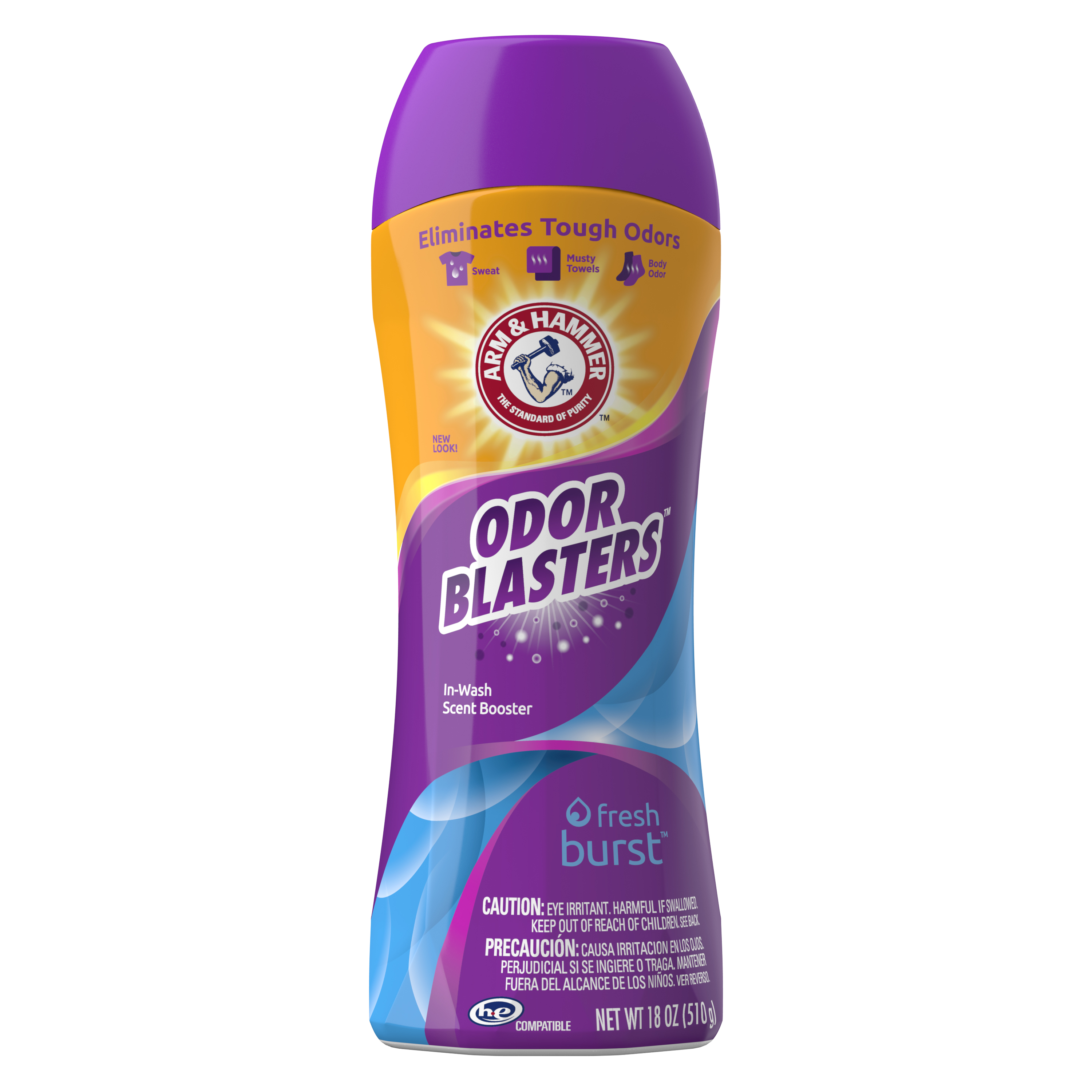
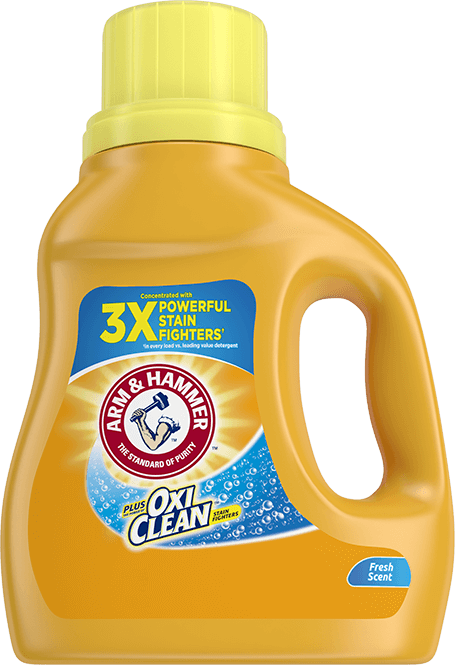
- ARM & HAMMER™ Plus OxiClean™ with Odor Blasters™ Laundry Detergent uses triple action power and contains 3X odor fighters in every load vs. the leading value laundry detergent. This enzymatic laundry detergent helps get rid of tough stains and eliminate stingy odors in one fell swoop.
- ARM & HAMMER™ Plus OxiClean™ with Fade Defense™ Laundry Detergent uses Fade Defense™ technology to help protect darks and brights from fading. It also contains 3X powerful stain fighters in every load vs. the leading value laundry detergent.
Alternatively, you can pair ARM & HAMMER™ Super Washing Soda with a laundry detergent of your choice. Add 1 cup ARM & HAMMER™ Super Washing Soda along with your usual amount of laundry detergent before starting the wash cycle for effective hard water washing.
2. Don’t Overdo it with the Laundry Detergent
You might think, if hard water lessens the efficiency of your washer over time, you need to add more laundry detergent to thoroughly clean your clothes. But that’s a misconception. Using too much laundry detergent can leave residue on your clothes that will trap the minerals in hard water and cause dinginess or fading.
So, avoid using excessive laundry detergent. Rather, pick a powerful laundry detergent for hard water and use the recommended amount of laundry detergent as indicated on the product label.
3. Avoid Overstuffing the Washer
Doing smaller loads of laundry is often recommended, anyway. For one, it’s more optimal in terms of sorting items by fabric type and washing those items together. Moreover, leaving ample space in the washer gives your clothes, the water, and your laundry detergent more room to move around – and that’s what you want when you’re looking for a thorough clean.
4. Clean Your Washing Machine
Failing to clean your washing machine can result in soap scum buildup. That, in turn, can lead to soap scum buildup and detergent residue. It can also lessen your washer’s proficiency over time. As we discussed, hard water can also make your washer less impactful in cleaning clothes. Try using OxiClean™ Washing Machine Cleaner to give your washer a nice refresh so it can return to peak performance.
Is Hard Water Bad for Your Skin?
Hard water does not pose significant health risks. However, it can have some detrimental effects on the skin such as dryness, itchiness, and irritation over time. Contact with hard water can disrupt normal skin barrier function, removing the moisture from your skin and resulting in clogged pores.
What Do Water Softeners Do?
Home water softeners, also called ion exchange units, demineralize water to “soften” it. The resin beads in water softeners trap calcium, magnesium, and other minerals in hard water and then swap them out in exchange for sodium or potassium.
The Department of Energy recommends installing water softeners in every home. Indeed, reducing the amount of hard water can help you protect your appliances, enhance laundry and dishwashing processes, and more. However, spatial and cost considerations certainly come into play.
ARM & HAMMER™ Laundry Has Hard Water Solutions
Having hard luck with hard water? Are your clothes looking worse for wear because of it? ARM & HAMMER™ liquid laundry detergents contain baking soda, and our enzymatic detergents work to break down the minerals found in hard water. Don’t let hard water threaten the lifespan of your clothes. Turn to ARM & HAMMER™ liquid laundry detergents to help preserve the look and feel of your items even if you’re washing in hard water.