The Scoop on Nighttime Nasal Congestion & Using Saline Nasal Sprays to Help

When you have allergies or feel sick, you might feel like your congestion symptoms gradually improve during the day – only to take a turn for the worse. But why does that stuffy nose seem to rear its head at night?
It’s time to get the lowdown on nighttime nasal congestion. We’ll discuss the reasons for a blocked nose at night and some strategies you can use to help get rid of that stuffy nose feeling when you’re trying to sleep. Plus, you’ll learn more about using saline nasal sprays to help rinse the nasal passages and relieve your blocked nose before your head hits the pillow.
Why Does Nasal Congestion Get Worse at Night?
Congestion gets worse at night because of the dry air and lying down when trying to sleep. Mucus drains from your nasal passages when you’re standing or moving around during the day. When lying down, however, the blood vessels lining the nasal passages dilate.
Dilation of the blood vessels in your nasal passages leads to mucus buildup and inflammation. Dry air environments can also prompt irritation and further inflammation.
Another reason nasal congestion worsens at night involves the body’s circadian rhythm – our internal 24-hour clock that helps regulate immune responses and other bodily functions. The circadian rhythm signals the immune cells to become more active at night. That, in turn, prompts them to target germs in the body by creating inflammation, which is often why cold viruses and other respiratory illnesses or allergy symptoms feel worse at night.
Why Does One Nostril Get Clogged at Night?
Nighttime nasal congestion in just one nostril may be part of the nose’s natural cycle of congestion and decongestion. The blood vessels in the nasal passages, known as nasal turbinates, alternate swelling and shrinking in each nostril to help flush congestion.
However, there are other reasons for one nostril to be blocked at night. These could include:
- Side sleeping: You might experience added stuffiness in the nostrils when facing the pillow on whatever side you choose when you sleep. This may change to the other nostril becoming congested if you flip to the other side.
- Deviated septum: If you have a deviated septum, your nasal cartilage is off-center. That asymmetry may cause the congestion to become more noticeable on one side.
- Irritants: Allergies, smoke, foul odors, or dry air (usually in heated indoor environments) can cause more pronounced swelling in one of the nasal passages and lead to greater blockage in one of your nostrils.
Given the nature of our nasal cycle and how the immune response results in congestion when we’re sick or have allergies, it’s common to have single-nostril blockage at night. But you should reach out to your doctor if you experience symptoms like difficulty breathing, bleeding, or nasal bleeding in addition to one nostril consistently getting clogged. This may be a sign of a structural issue.
Other Symptoms of Nighttime Nasal Congestion
Nasal congestion is often associated with other symptoms beyond stuffy or runny nose. Postnasal drip naturally happens when mucus drains from the sinuses and nose and into your throat. This can result in symptoms like:
- Sore throat
- Hoarseness
- Cough
- Sneezing
- Sinus pressure or headache
Postnasal drip typically worsens at night when we lay down, as gravity will generally force mucus to collect at the back of the throat. So, if you have nighttime nasal congestion, you’ll likely experience one or more of these symptoms either while trying to sleep or when you wake up in the morning.
How to Reduce Stuffy Nose at Night
Nighttime nasal congestion can prove especially bothersome if it’s hurting your sleep. If you’re feeling stuffy and having trouble getting shut-eye, you probably want to do everything in your power to relieve nighttime nasal congestion so you can get the rest you need to feel healthier. Follow along for some steps to help reduce stuffy nose and get rid of some of your nasal congestion at night.
Does Saline Nasal Spray Help Congestion?
Saline nasal spray helps relieve stuffy nose and congestion by moisturizing and flushing out the nasal passages, helping to clear your nose of irritants while loosening and expelling mucus buildup.
Why You Should Use Saline Nasal Sprays for Nighttime Nasal Congestion
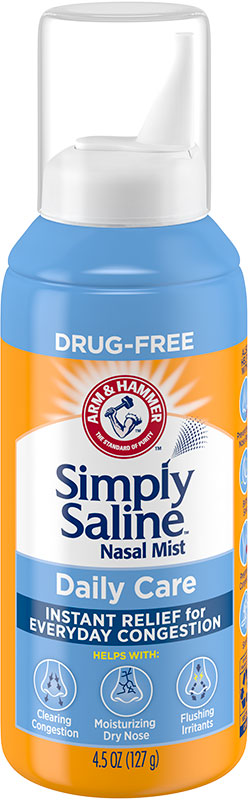
If you haven’t been using saline nasal sprays to help ease nighttime congestion, they should quickly become your go-to option – for several reasons. Firstly, most saline nasal spray formulas (and saline solutions for other uses) are drug-free. That means they can be used daily or as often as needed. For example, ARM & HAMMER™ Simply Saline™ Daily Care Instant Relief for Everyday Nasal Congestion helps relieve dryness by moisturizing and flushing the nasal passages of irritants.
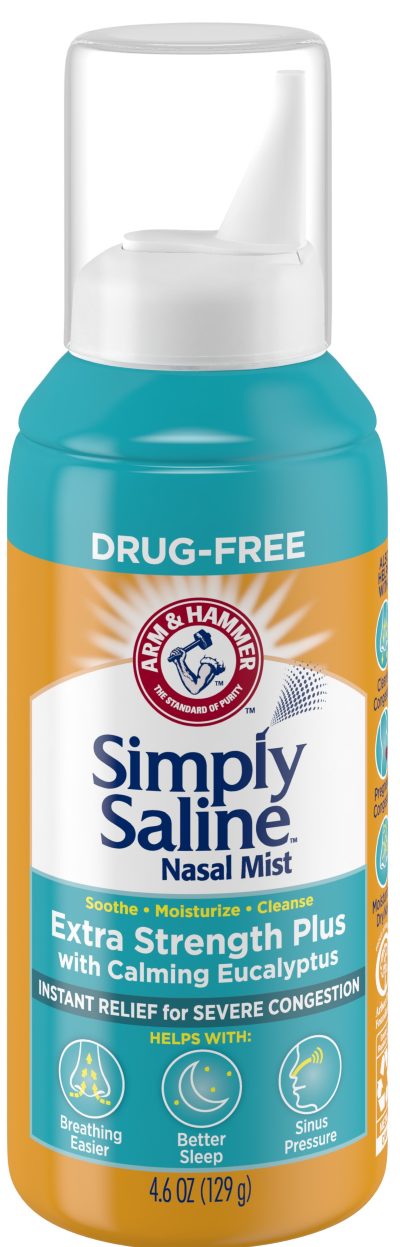
Additionally, some saline nasal sprays are formulated specifically for nighttime use to help relieve nasal congestion. By easing congestion and clearing the nasal passages, decongestion may reduce snoring and support better sleep. ARM & HAMMER™ Simply Saline™ Extra Strength, Nighttime Formula includes Eucalyptus and helps relieve severe congestion.
Sleep in an Elevated Position

Remember how we discussed postnasal drip as a key factor in nighttime nasal congestion when laying flat on your back or your side? For those reasons, it’s a good idea to sleep in a more elevated position. Adjusting your sleep position so that your head is elevated can help reduce the amount of mucus pooling in the throat and sinuses, thereby promoting mucus drainage.
You can achieve a more elevated sleeping position through a number of methods. The most common, though, is adding a second (or “wedge”) pillow behind the pillow you lay your head on and propping the pillows against the headrest. You might also consider sleeping on your side when you have nighttime nasal congestion if you tend to sleep on your back. Then again, if you experience blockage in a single nostril or have a deviated septum, sleeping on your back may be easier – in any case, make sure you’re propping your head up.
Ensure Good Airflow in Indoor Environments
As previously noted, dry indoor environments can lead to nasal congestion, especially at night. To help with this, try to increase airflow in your bedroom or wherever you sleep.
For some, this could mean running a dehumidifier in your room throughout the day and night while you sleep. You might also consider running a fan or even opening a window to get fresh air into the sleeping environment, so long as it is comfortable enough to do so. Additionally, make sure your central air system is functioning properly, and consider setting the AC to a cooler temperature while you sleep.
Lastly, air quality can suffer from dust and other irritants in the bedroom. It’s a good idea to wipe down counters and picture frames and wash your bedding regularly so you can help get rid of possible allergens or other irritants in the room and improve the air quality.
Get Some Steam
Inhaling steam can help thin out the mucus in your nasal passages and make it easier to remove or drain. That’s why humidifiers are a nice addition to the sleeping environment when you have nighttime nasal congestion. Otherwise, consider taking a hot shower before you go to bed. The steam from the shower can help loosen the mucus in your sinuses and clear the nasal passages so it’s easier to breathe when you’re trying to sleep.
Stay Hydrated
Drinking water throughout the day is a key part of maintaining overall health and wellbeing, period. But staying well-hydrated is especially important when you’re feeling congested.
Mucus hardens when you feel dehydrated – which explains why you might feel stuffed up the morning after a night of drinking alcohol. Conversely, drinking water and staying hydrated helps thin the mucus and makes it easier to drain. Make sure to get plenty of fluids and eat a balanced diet to help ease nighttime nasal congestion.
Does Blowing Your Nose Make Congestion Worse?
Blowing your nose can worsen congestion if done improperly, notably if you blow your nose too hard. Past studies have shown that excessive blowing can result in nasal fluid dripping back into the sinuses.
It may seem tempting to blow your nose with force when you’re stuffed up. But that may only amplify your congestion. Instead, you want to blow gently, placing a finger on the opposite nostril of the side being blown on and closing the nostril to prevent air from escaping through the opposite side.
And, if your stuffiness feels almost unbearable, remember you can use a saline nasal spray to help rinse the nasal passages and loosen the mucus so it’s more easily drained and removed.
Say No to Nighttime Nasal Congestion with ARM & HAMMER™ Simply Saline™ Nasal Sprays
Feeling bogged down by stuffiness and blocked nostrils? Don’t take nighttime nasal congestion lying down.
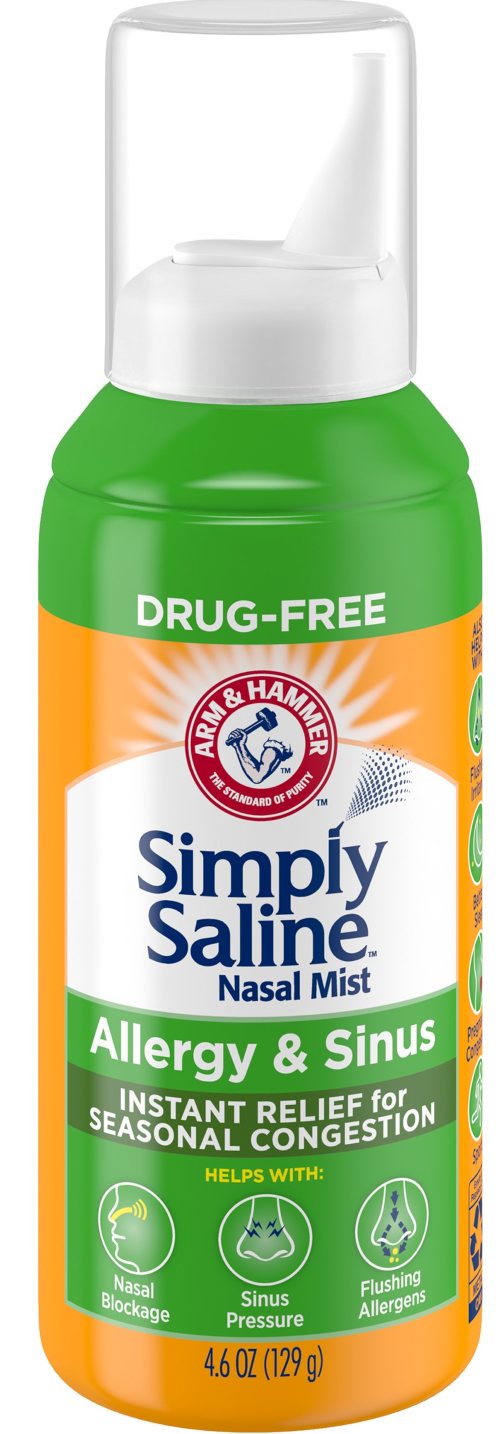
Whether you need to reduce nighttime nasal congestion, rinse your nasal passages daily, or soothe congestion from allergies, ARM & HAMMER™ Simply Saline™ Nasal Sprays have an option for you – and your kids, too! All formulas are safe to use as often as needed and are doctor-recommended for use with prescription and OTC cold/allergy medications.
* This material is provided solely for informational and educational purposes only. Always seek professional healthcare or medical advice for any health related issues.