All About Postnasal Drip: Causes, Symptoms, and Saline Nasal Spray Treatments

Feeling stuffed up or slogging through each day with the sniffles and a cough can prove quite tiresome. That constant tickle in your nose causing you to sneeze may grow every bit as frustrating, especially if your congestion is posing issues to your ability to think and function or settle down for a good night’s sleep. Oftentimes, these symptoms are brought on by postnasal drip. If you haven’t heard of postnasal drip before, now is as good a time as any to get acquainted.
We’re going to give you the skinny on postnasal drip, notably what that term refers to and its relationship with colds and allergies. We’ll also discuss why you might be more susceptible to postnasal drip and discuss treatment options, including saline nasal sprays for relief!
What is Postnasal Drip?
Postnasal drip is essentially excess mucus that builds up in the nostrils. These mucus secretions then drip down the back of your throat. Typically, this happens when the secretions draining from the nose are thicker or thinner than usual.
The size of the mucus secretions matters in this case. The glands in your nose and throat constantly produce mucus, and you unconsciously swallow some of this mucus because it mixes with saliva. Even if the thought of mucus grosses you out, you should know that mucus can help to clean your nasal lining and even fight infection.
However, if your mucus secretions fluctuate drastically, or if you have excess mucus in the nose or sinuses, then you’re more likely to be aware of the mucus buildup. That’s when postnasal drip can pose symptomatic issues.
What Causes Postnasal Drip?
Allergies and the common cold are frequent causes of postnasal drip. Here are some other possible causes:
- Environmental elements like changing temperatures, especially cold temperatures
- Sinus infections (sinusitis)
- Spicy foods
- Physiological factors such as age and pregnancy
- Chronic acid reflux (GERD)
- Deviated septum
Most of these causes are pretty self-evident. However, you may be curious as to what exactly a deviated septum is and how it can sometimes result in more frequent postnasal drip.
The Link Between a Deviated Septum & Postnasal Drip
A deviated septum is, in essence, a crooked nose. More specifically, it’s when the cartilage between your two nostrils (septum) is off-center and causes an imbalance in mucus draining.
When you have a deviated septum, one of your nasal passages is smaller than the other. This generally means that you’re receiving extra air in the larger nostril, which can in turn dry out the lining of your nose. The body responds to the drying out by making more mucus. And, as we’ve established, excess mucus often leads to postnasal drip.
You might not know for sure whether you have a deviated septum. Some people are born with a deviated septum. Others may have had their nasal structure altered as the result of an injury, damage, or a procedure. Generally, people with deviated septums have more trouble breathing through the nose.
Consult a healthcare provider or ear, throat, and nose specialist if you have trouble breathing through the nose, experience frequent congestion, or have general curiosity about whether you have a deviated septum.
What are the Symptoms of Postnasal Drip?
Since postnasal drip involves mucus draining from the nasal passages and into your throat, you are likely to experience a sore throat. You might also feel swelling, hoarseness, or a lump in the back of your throat. Additionally, the mucus buildup may usher in a need to clear your throat.
Other postnasal drip symptoms may include:
- Coughing, especially at night
- Bad breath
- Blocked or runny nose
- Tickle in your throat
If you have postnasal drip from allergies, you might also experience more frequent sneezing, an itchy nose, and teary or watery eyes. You may also have more chest congestion and feel like you need to cough up phlegm.
Colds, Allergies, and Postnasal Drip
We pointed to allergies and the common cold as two of the most common causes of postnasal drip. Why is this? It all has to do with your body’s response to irritants in the nose or viral infections.
When you have seasonal allergies, your nasal passages become inflamed because of dust, pollen, and other irritants entering through the nostrils. That inflammation and swelling occur in part because of the increased mucus production, which can then build in the sinuses or drip down your throat.
Similarly, when you have a cold virus or bacterial infection, your body reacts by producing stickier, thicker mucus to help fight the virus or infection. This is a positive since snot and phlegm can help trap irritants. The tiny hairs along the mucus-lined surface of your nose and lungs then expel them from your body when you blow your nose or cough.
However, the added mucus has nowhere to go but into your throat. Thus, you’re more than likely to feel some of the postnasal drip symptoms listed above.

Postnasal Drip Treatments
Postnasal drip from allergies or other causes may feel bothersome. However, there are various strategies you can employ to help reduce the impact of your symptoms. Your healthcare professional may prescribe you medication depending on the severity of your symptoms. Alternatively, you also have over-the-counter (OTC) and at-home postnasal drip remedies at your disposal.
Use a Saline Nasal Spray
Remember how postnasal drip can cause thick mucus secretions? Well, using a saline nasal spray can help to irrigate and moisturize the nasal passages and break up those secretions, which in turn can help relieve postnasal drip congestion. Saline nasal sprays can also help to flush lingering irritants—including dust, pollen, and dirt—from the nasal passages and thus reduce postnasal drip symptoms.
ARM & HAMMER™ Simply Saline™ Nasal Sprays are drug-free and can be used as needed whenever your nose feels stuffy, itchy, or dry. That may make them a preferable option to an OTC nasal decongestant, since decongestants can have a rebound effect and shouldn’t be taken for more than a couple of days. Additionally, our line of saline nasal sprays also come in a range of formulas:
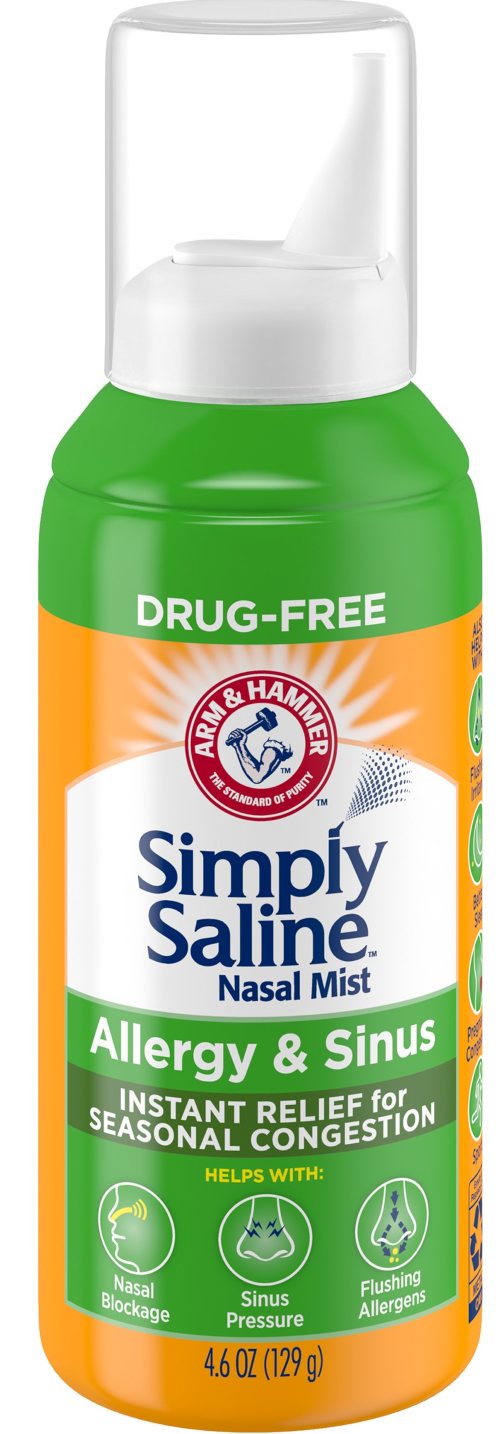
- ARM & HAMMER™ Simply Saline™ Allergy & Sinus, Seasonal Congestion has a hypertonic formula and gentle mist that helps clear seasonal congestion associated with pollen, dust, grass, hay fever, and pet dander.
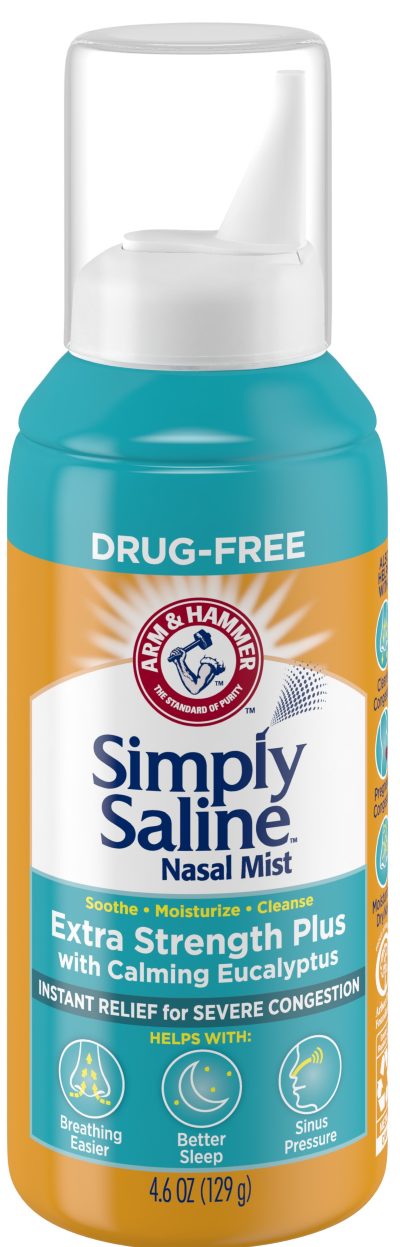
- ARM & HAMMER™ Simply Saline™ Extra Strength, Severe Congestion moisturizes the nasal passages and helps relieve severe congestion, sinus pressure, and nasal blockage.
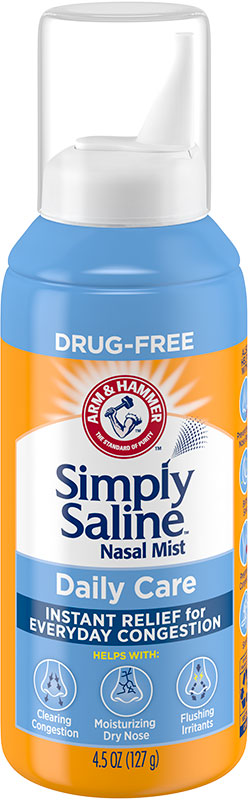
- ARM & HAMMER™ Simply Saline™ Daily Care Instant Relief for Everyday Congestion is specifically formulated for daily use to help relieve dryness and flush irritants from the nasal passages.
- ARM & HAMMER™ Simply Saline™ JR Nasal Relief is a saline nasal spray for babies of all ages. It has an infant-safe, sterile tapered nozzle and can be used to moisturize and gently flush dust and irritants from the nasal passages.
Saline solutions have numerous uses. Some can help clean wounds and reduce the risk of infection. Others may help rinse out your eyes. In this case, saline nasal sprays can help relieve postnasal drip symptoms.
Are you wondering how to flush your little one’s nose and help them navigate congestion or finding yourself battling seasonal allergies and postnasal drip? ARM & HAMMER™ Simply Saline™ Nasal Sprays can help to keep the nasal passages moisturized and expel irritants for quick and effective relief whenever you’re dealing with congestion or stuffiness from postnasal drip.
Add Some Steam & Avoid Irritants
Making sure you’re in a well-ventilated environment can help mitigate the severity of your congestion and other postnasal drip symptoms. To that end, you might consider using a humidifier whenever your seasonal allergies percolate or you’re dealing with illness.
Humidifiers release water vapor and steam into the air and can help treat dryness in the nose by thinning out nasal secretions. Another way to get some steam inhalation? Try taking a hot shower. Or, you could choose to eat some chicken noodle soup!
Setting your environment up for success also means doing your best to avoid potential irritants. That might mean spending less time outside when pollen counts are high. But you should also be wary of things like tobacco smoke or perfumes contributing to your congestion and postnasal drip symptoms.
Drink Lots of Water
You can receive a number of health benefits from staying hydrated on a daily basis. Drinking water can help assist your digestive system in its functionality. It can also help improve energy levels and regulate your internal body temperature. But did you know drinking water can also help relieve the symptoms of postnasal drip?
For starters, staying hydrated helps thin out your mucus secretions and makes it easier to clear the nasal passages when you’re congested. Moreover, you’ll likely find that drinking water can help fight inflammation and flush toxins when you have a sore throat.
Adjust Your Sleeping Position
If you usually lie flat on your back or your side when you sleep, one postnasal drip treatment might involve changing this position. Try propping up a pair of pillows and sleeping with your head closer to a 45-degree angle. Sleeping with your head slightly elevated can help limit the amount of mucus that drains down and collects at the back of your throat.
Get Instant Relief with Saline Nasal Spray for Postnasal Drip Symptoms
Understanding the cause of your postnasal drip and doing everything in your power to get fast relief is crucial to getting past congestion, sinus pressure, sore throat, and other symptoms of postnasal drip. Taking care of your body and trying some at-home remedies can provide relief. But it’s also a great idea to stockpile your home with ARM & HAMMER™ Simply Saline™ Nasal Sprays.
Maybe you’re someone who is constantly nursing a stuffy or blocked nose as well as other congestive symptoms. Well, you can use drug-free ARM & HAMMER™ Simply Saline™ Nasal Sprays daily or as needed to help irrigate and moisturize your nasal passages for relief. Got the sniffles and constant sneezing due to spring allergies? Yep, there’s an ARM & HAMMER™ Simply Saline™ Nasal Spray that help target some of your most loathsome allergens and irritants.
Don’t let the symptoms of postnasal drip hold you hostage. Use ARM & HAMMER™ Simply Saline™ Nasal Sprays for instant relief so you can start to feel better and get back on your feet!
* This material is provided solely for informational and educational purposes only. Always seek professional healthcare or medical advice for any health related issues.