What is the Difference Between Baking Soda and Baking Powder?
Baking soda and baking powder are both leavening agents, meaning they cause dough or batter to expand by releasing gas. This process creates a light and airy texture found in many baked goods. Yeast is another common leavening agent used in baking. Even air (caused by vigorous whipping and mixing) or steam (created by heat in the oven) can be leavening agents, depending on the baking method.
Baking soda and baking powder are more common in recipes for cookies, cakes, and quick breads. They are responsible for the light, fluffy, and porous structure that makes baked goods so delicious. If you’re wondering, “What makes bread rise, baking soda or baking powder?” the answer is both; it simply depends on the recipe.
Even though baking soda and baking powder can serve the same purpose, they are chemically different and cannot be substituted one for one in recipes. Because they react differently, using the wrong one can cause your baked goods to fall flat. Literally.
What is Baking Soda?
ARM & HAMMER™ Baking Soda begins with trona, a naturally derived mineral mined in Green River, Wyoming. Through a carefully controlled purification process, it is transformed into the pure, uniform powder trusted in homes since 1846. Every batch is tested for purity and quality and held to USP Food Grade Standards.
Common uses for baking soda include baking, cleaning, deodorizing, and personal care.
What is Baking Powder?
Baking powder is a blend of baking soda, one or more acid components, and a stabilizer like cornstarch. Because it’s a mixture, the purity of baking powder depends on the quality and balance of its ingredients rather than a single compound. Different brands may use different acid components, which alter the flavor and performance.
Baking Soda vs. Baking Powder in Recipes
Baking Soda
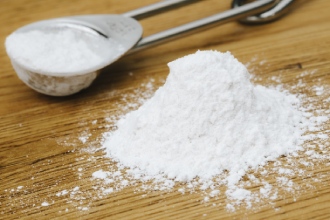
Baking soda is a pure sodium bicarbonate, a fine white powder that has many uses. You may see it labeled as bicarbonate of soda, but they are simply names for the same ingredient.
Baking soda is a fast-acting leavening agent. As soon as it is combined with moisture and an acidic ingredient, such as honey, buttermilk, molasses, chocolate, yogurt, sour cream, brown sugar, or cocoa, a chemical reaction occurs that produces bubbles of carbon dioxide. These bubbles create a rise and light texture in baked goods.
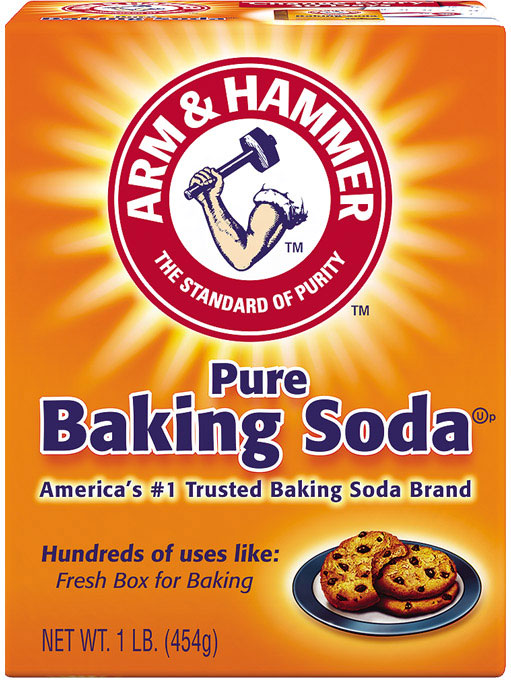
The key is timing. Because the reaction happens immediately, you need to get your batter or dough into the oven quickly before the bubbles dissipate. That’s why baking soda is primarily used for cookies and muffins. For baking, the classic Arm & Hammer™ Baking Soda box is a great option.
Baking Powder
Baking powder, on the other hand, is a blended mixture containing baking soda, acidic salts or dry acids, and often a starch such as cornstarch. This means it already includes the acid needed to activate the reaction.
Baking powder typically contains tartaric acid, more commonly known as cream of tartar. Cream of tartar is a dry acid, so when you use baking powder, you are adding the acidic ingredient that will produce the carbon dioxide bubbles at the same time. With the acid already built in, baking powder is often used in recipes that do not include other acidic ingredients, such as molasses or buttermilk.
As with baking soda, the purpose of baking powder is to create air bubbles that give your baked goods their light, airy texture.
There are two types of baking powder:
Single-acting baking powder: Single-action baking powder creates the carbon dioxide bubbles upon contact with moisture, like baking soda. Similarly, that quick reaction means you need to get the batter or dough into the oven fast.
Double-acting baking powder: Double-action baking powder is more commonly used and has two leavening periods (hence the double action). The first leavening period is created when the alkaline baking soda and the acidic cream of tartar are combined with moisture – the recipe’s milk or water. The second leavening period happens when the ingredients are heated to a certain temperature during baking.
Baking Soda vs. Baking Powder Chart
| Feature | Baking Soda | Baking Powder |
|---|---|---|
| Main ingredient | Sodium bicarbonate | Baking soda + acid |
| Needs acid to activate? | Yes | No |
| Reaction timing | Immediate | Two-stage |
| Best for | Cookies, muffins | Cakes, pancakes, biscuits |
| Strength | Stronger | Milder |
Can You Substitute Baking Soda for Baking Powder?
You can substitute baking soda for baking powder, but you’ll need to make some adjustments. Baking soda is a much more powerful leavener than baking powder, about 3-4 times as strong. That is why you will notice that recipes usually call for a small amount of baking soda, typically ¼ teaspoon per 1 cup of flour. If you substitute with a 1:1 ratio, your baked goods will have no leavening, which will alter the taste and make them quite flat. Instead, follow these conversions for baking soda and baking powder.
Baking Soda for Baking Powder: Quick Conversion Chart
| If You Need... | Use This Instead | Notes |
|---|---|---|
| 1 tsp baking powder | ¼ tsp baking soda + ½ tsp cream of tartar | Best direct substitute |
| 1 tsp baking powder | ¼ tsp baking soda + 1 tsp lemon juice or vinegar | May slightly alter taste |
| 1 tsp baking soda | 3 tsp baking powder | No extra acid needed |
What Happens If I Use the Wrong One?
Using the wrong one can significantly affect your results when baking. If you use baking soda instead of baking powder, your recipe may not rise properly unless there’s an acidic ingredient present, and it can leave a bitter or soapy taste.
On the other hand, if you use baking powder instead of baking soda, your baked goods will likely still rise, but not as much, resulting in a denser texture and possibly a slightly off or metallic flavor. Since they function differently, they aren’t interchangeable in equal amounts, so it’s best to follow the recipe as written.
Why Do Some Recipes Use Both?
Many recipes combine both baking powder and baking soda to get the best rise, flavor, and texture. Baking soda reacts quickly with acidic ingredients to create an initial lift, while baking powder provides additional leavening on its own, often giving a second rise during baking.
Key Takeaways: Baking Soda vs. Baking Powder
Baking soda and baking powder are not interchangeable, even though they’re both leavening agents. Using the wrong one (or the wrong amount), can affect both the texture and taste of your baked goods.
What is the Difference?
- Baking soda (sodium bicarbonate) is a single ingredient that requires an acid (like buttermilk, yogurt, or vinegar) to activate
- Baking powder is a complete leavening agent that already contains both a base (baking soda) and an acid
Can You Substitute One for the Other?
- Yes, but adjustments are needed:
- Replace baking soda with 3x the amount of baking powder
- Replace baking powder with ¼ tsp baking soda + an acid (like cream of tartar or lemon juice)
Using the correct leavening agent ensures your baked goods turn out as desired: light, airy, and properly risen. Baking soda is a single ingredient leavener that needs an acid to work, while baking powder is a pre-mixed solution designed for convenience. For consistent results, keep a reliable staple like ARM & HAMMER baking soda on hand for baking and beyond.
Best of luck in baking and check out our top dessert recipes that use both ingredients.